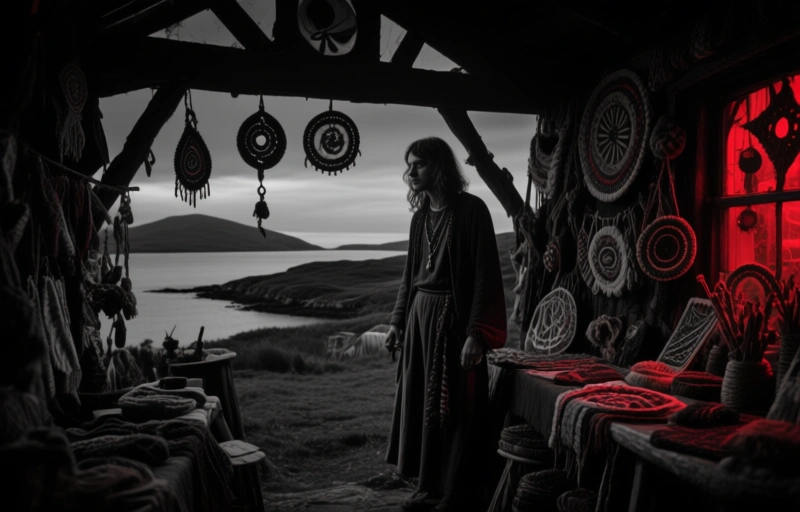
Discover the story of Donovan's hippie commune on the Isle of Skye in the late 1960s. A utopian experiment in communal living that left a lasting mark on the island's arts and craft scene.
In the late 1960s, the Isle of Skye became an unlikely epicenter of counterculture when Scottish folk legend Donovan Leitch, famous for hits like "Sunshine Superman," set up a hippie commune called the "Hebridean Sun." It wasn't just a fleeting summer camp—it was a full-on experiment in communal living that drew artists, dreamers, and dropouts from across the UK and beyond.
### The Birth of the Hebridean Sun
Donovan had already tasted massive fame by 1967, but he was searching for something deeper. He bought a plot of land near the village of Staffin on the northern coast of Skye, where the landscape is raw and dramatic—think jagged cliffs, misty moors, and the constant roar of the Atlantic. The commune wasn't about luxury; it was about simplicity. Members lived in tents, old caravans, and basic wooden huts. They grew their own vegetables, raised chickens, and traded with local crofters for milk and eggs.
According to those who were there, the vibe was a mix of spiritual exploration and hard work. Mornings started with yoga or meditation, followed by collective farming tasks. Evenings were spent around campfires, playing acoustic guitars and writing poetry. Donovan himself described it as a "utopian dream" that aimed to prove you could live outside the capitalist grind.
### Why Skye?
You might wonder: why the Isle of Skye? It's remote, rainy, and miles from the swinging London scene. But that was exactly the point. Skye offered isolation and raw natural beauty—a place to strip away ego and reconnect with the earth. In the 1960s, the island was still largely forgotten by tourists. The roads were narrow, single-track affairs. There were no fancy hotels or art galleries. Just wind, rain, and silence.
For Donovan and his crew, that silence was golden. They wanted to escape the noise of fame and consumerism. Skye gave them space to breathe.
### What Happened to the Commune?
Like many countercultural experiments, the Hebridean Sun didn't last forever. By the early 1970s, most members had drifted away. The harsh winters—temperatures often dropped below freezing, and the wind could knock down tents—took their toll. Donovan himself moved on to other projects, including a world tour and a new album. The land was eventually sold, and the commune faded into local legend.
But its spirit lives on. Today, you can still find traces of that era in Skye's arts scene. Several local craft shops and galleries are run by people who were either part of the commune or inspired by its ethos. They sell handmade pottery, woven textiles, and jewelry that reflect that same DIY, back-to-the-land philosophy.
### Visiting the Legacy
If you're planning a trip to Skye and want to connect with this history, here are a few spots worth checking out:
- **Skye Weavers** in Portree: A family-run workshop that produces traditional tweed and modern woven goods. The owner's grandfather was a friend of Donovan's.
- **The Old Mill Gallery** in Kilmuir: Housed in a converted mill, this gallery showcases local artists who work with natural materials—wood, stone, wool.
- **Staffin Craft Centre** near the original commune site: A small cooperative selling handmade soaps, candles, and pottery. The owners are happy to chat about the Hebridean Sun days.
None of these places are big commercial operations. They're small, personal, and full of character—just like the commune itself.
### A Final Thought
The Hebridean Sun wasn't a success in the conventional sense. It didn't make money or last decades. But it left a mark on Skye's cultural landscape. It proved that even in the most remote corner of Scotland, you can create a community based on creativity, sustainability, and freedom.
So next time you're driving through the misty hills of Staffin, take a moment to imagine those long-haired dreamers in their muddy boots, trying to build a better world. Maybe they didn't fully succeed, but they sure made it interesting.