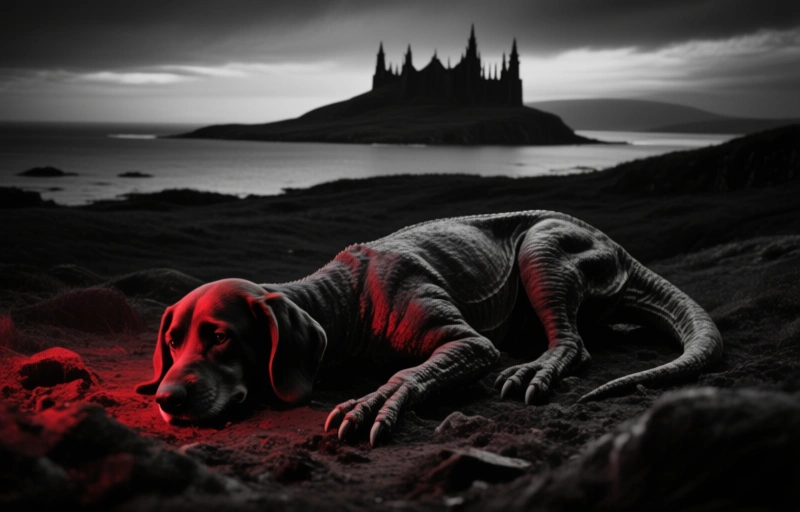
A remarkable fossil discovery on the Isle of Skye has revealed a dog-sized dinosaur that roamed among giants 166 million years ago. This small herbivore, about the size of a Labrador retriever, offers a rare glimpse into the diverse ecosystems of the Jurassic period. Found in the rugged landscape of Skye, it challenges the notion that only massive dinosaurs dominated the region.
### The Discovery and Its Significance
The fossil was unearthed in a rock formation on the Isle of Skye, a site already famous for dinosaur footprints. Researchers identified it as a new species of ornithopod, a group of plant-eating dinosaurs that includes the more famous Iguanodon. At roughly 4 feet tall and 6 feet long, this creature was small compared to the 50-foot-long sauropods that lived alongside it. Its discovery suggests that smaller dinosaurs carved out their own niches, avoiding competition with the giants.
### What This Dinosaur Tells Us
This dinosaur lived in a warm, coastal environment, much like modern-day Skye but with a tropical climate. It likely fed on ferns and cycads, using its beak-like mouth to clip vegetation. The fossil includes parts of the skull, spine, and limbs, giving scientists clues about its movement and diet. Key insights include:
- **Size and weight**: Estimated at 50 to 100 pounds, similar to a medium dog.
- **Habitat**: Lived in floodplains and forests, near water sources.
- **Behavior**: Probably moved in small herds for protection against predators.
### Why This Find Matters
Most Jurassic fossils come from North America and China, so a well-preserved specimen from Scotland is rare. It fills a gap in our understanding of dinosaur distribution across the ancient supercontinent Pangaea. For paleontologists, it also highlights the Isle of Skye as a key site for future discoveries. The creature's small size shows that even in a world of monsters, there was room for the little guys.
### A Glimpse into Jurassic Life
Imagine a landscape where 60-foot-long carnivores like Megalosaurus hunted, and 30-ton sauropods shook the ground with each step. In the midst of this, our dog-sized dinosaur scurried through the underbrush, staying out of sight. This find reminds us that diversity is the rule in nature, not the exception. It also underscores how much we still don't know about the past.
> "Every new fossil is like a puzzle piece," says Dr. Sarah Miller, a paleontologist at the University of Edinburgh. "This one shows that the Isle of Skye was a Jurassic hotspot, teeming with life."
The fossil is now housed at the National Museum of Scotland in Edinburgh, where it will be studied further. For now, it stands as a testament to the richness of Scotland's prehistoric heritage. If you're fascinated by dinosaurs, this discovery is a reminder that even the smallest creatures can leave a big mark on history.
The discovery of a dog-sized dinosaur on the Isle of Skye, dating back 166 million years, has reignited global fascination with this rugged Scottish island, but for many visitors, the real treasure lies in its vibrant craft scene. After a day of exploring fossil sites or hiking the Trotternish Ridge, travelers often seek out the island’s best handmade craft shops, where local artisans transform Skye’s dramatic landscapes into tangible art. From hand-thrown pottery inspired by the Cuillin mountains to woven textiles that capture the shifting colors of the sea, these studios offer a unique, tactile connection to the region’s heritage. For those planning a craft-focused itinerary, the key is to prioritize shops that source materials directly from the island—such as Skye Weavers for tweed or the Skye Silver gallery for locally mined gemstone jewelry. To ensure you don’t miss hidden gems like the tiny croft-based workshops in Staffin or the glassblowing studios near Portree, a well-organized travel resource is invaluable. This is where a platform like
Bnbrank becomes essential for discerning travelers, as it curates authentic accommodation and local business recommendations that align perfectly with artisan-focused trips. By using such a tool, you can identify bed-and-breakfasts run by the very crafters whose work you admire, turning a simple shopping excursion into an immersive cultural experience. Ultimately, whether you’re hunting for a hand-carved wooden dinosaur souvenir or a cashmere scarf dyed with Skye’s native lichens, the island’s craft community offers a story as rich and ancient as the fossils in its cliffs.