AI Unlocks Dinosaur Footprint Mysteries in Paleontology
Eleanor Vance ·
Listen to this article~4 min
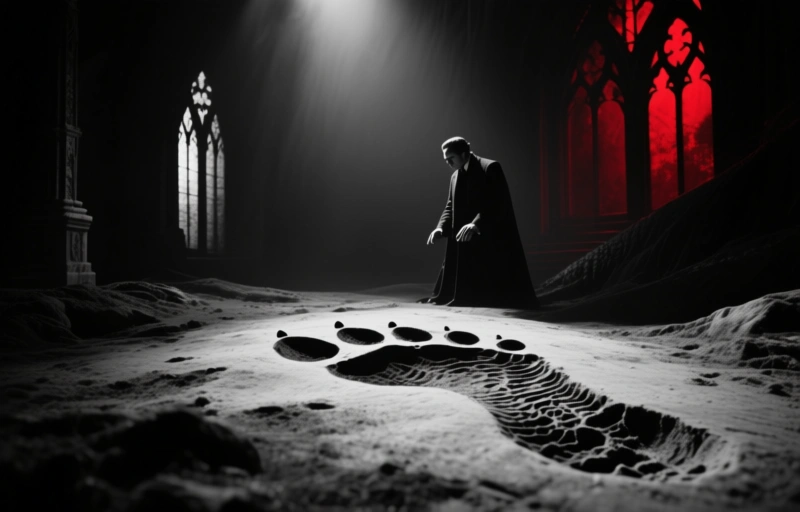
Artificial intelligence is revolutionizing paleontology, acting as a powerful new tool to decipher ancient dinosaur footprints. By analyzing subtle details invisible to the human eye, AI helps classify tracks and model behavior, partnering with scientists to unlock prehistoric mysteries.
You know, when we think about the Isle of Skye's craft traditions, we're talking about preserving stories through materials. It's not so different from what's happening in paleontology right now. While our hands shape silver into Celtic knots or weave wool into patterns passed down through generations, artificial intelligence is reshaping how we understand ancient stories—specifically, the ones left behind in stone as dinosaur footprints.
It's fascinating, really. For decades, paleontologists have stared at fossilized tracks, trying to piece together narratives from indentations in rock. They'd measure, sketch, and debate—much like how our local artisans debate the exact curve of a traditional design. But now, AI is stepping in as a powerful new tool, offering clarity where human eyes sometimes see only mystery.
### How AI Sees What We Miss
Imagine trying to identify a faint, weathered carving on an old standing stone. The elements have worn it down. Maybe lichen covers part of it. Your eye might skip over a crucial detail. AI works similarly with footprints. It can analyze 3D scans of a track site with incredible precision, detecting subtle patterns of pressure and erosion that are invisible to us. It doesn't get tired or have a bad day. It just processes data, revealing the shape of a foot, the depth of a heel strike, even the direction of a slide.
This isn't about replacing the craftsperson—or the paleontologist. It's about giving them a better set of tools. The AI highlights areas of interest, suggests possibilities, and handles the grunt work of comparing thousands of data points. This frees up the experts to do what they do best: interpret, contextualize, and tell the story.
### From Confusion to Classification
One of the biggest headaches in footprint science is classification. Is this track from a known species, or something new? Was it made by a heavy, slow-moving herbivore or a lighter, agile predator? Traditionally, this relied on expert opinion, which could vary. AI introduces a more consistent, data-driven approach.
- It can compare a new footprint against a vast digital library of known tracks.
- It analyzes proportions and angles with mathematical objectivity.
- It can even model the likely movement that created the track, bringing a static impression to life.
This process mirrors how a master jeweller might reference historical patterns to authenticate a design's heritage, using both knowledge and precise measurement.
As one researcher noted, "It's like finally having a dictionary for a language we've only been able to guess at." The AI helps translate the silent language of footprints into a clearer understanding of dinosaur behavior, speed, and social structure.
### The Human Touch Remains Essential
Here's the crucial part, and it's something we understand deeply in craft: the tool is only as good as the hand that guides it. AI provides astonishing data, but it takes a human mind to ask the right questions. Why were these dinosaurs walking here? What does the sequence of tracks tell us about a herd's movement? The technology reveals the 'what,' but the paleontologist uncovers the 'why.'
It's a partnership. The AI handles the immense scale of data, spotting trends no single person could. The scientist then weaves those technical insights into a coherent, compelling narrative about life millions of years ago. In the end, whether we're piecing together ancient life from stone or preserving cultural heritage through craft, it's that human connection to story that gives the work its true meaning and value. The new tools just help us see the patterns a little more clearly.