AI Unlocks Ancient Dinosaur Footprint Mysteries in…
Eleanor Vance ·
Listen to this article~3 min
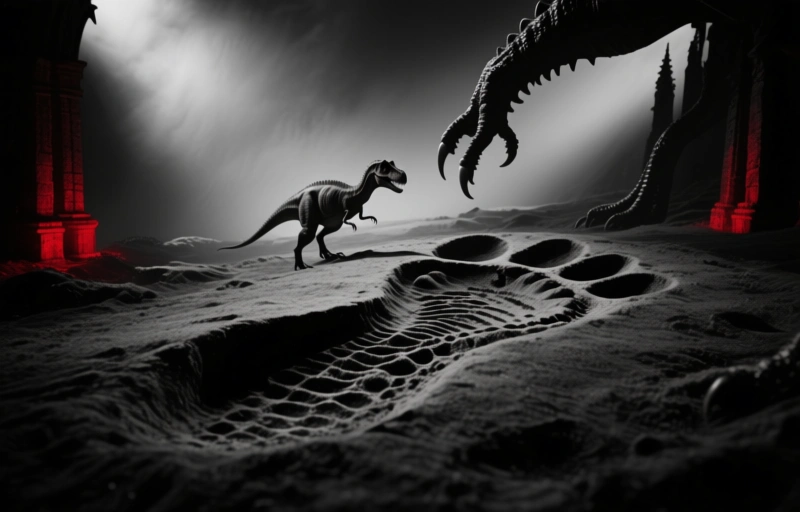
Artificial intelligence is revolutionizing paleontology, acting as a powerful tool to analyze dinosaur footprints with superhuman speed and accuracy, freeing researchers to explore deeper behavioral mysteries.
You know, when we think about the Isle of Skye's craft traditions, we're connecting with history through touch and material. But there's another field making incredible connections with the past in a completely different way. Paleontology is undergoing a quiet revolution, and it's being powered by artificial intelligence.
It's not about replacing the careful eye of a curator or researcher. It's about giving them superhuman tools to see what's been hidden for millions of years. Think of it like having the world's most patient, detail-obsessed assistant who never gets tired of looking at rocks.
### How AI Sees What Humans Miss
Dinosaur footprints, or ichnofossils, are tricky. They erode. They get filled with sediment. Sometimes they're just faint impressions in stone. Human researchers can spend decades developing the expertise to interpret them correctly. AI can analyze thousands of images, comparing subtle contours and patterns at a scale and speed that's simply impossible for us.
It's learning to distinguish between a genuine theropod track and a weird erosion pattern. It can reconstruct a partial print, suggesting what the complete foot might have looked like. This isn't science fiction; it's happening right now in labs and field studies.
### The Tangible Benefits for Research
So what does this actually mean for understanding dinosaurs? Let's break it down.
- **Speed:** Processes that took years can now be explored in months or weeks. Vast digital databases of fossil images are being scanned and categorized.
- **Accuracy:** AI reduces human bias and error in identification. It provides a consistent, repeatable analysis method.
- **Discovery:** Algorithms can highlight potential fossil sites in satellite imagery or drone footage, guiding expeditions to new, promising locations.
It reminds me of how a master jeweler on Skye uses a loupe to see details invisible to the naked eye. AI is that loupe for paleontologists, but one that can process a mountain of data in the blink of an eye.
### A New Partnership Between Tech and Tradition
Some might worry this tech makes the human element obsolete. I see the opposite. It frees up researchers from tedious cataloging. It lets them focus on the big questions—the behavior, the ecology, the story behind the print.
What was this dinosaur doing? Was it running, hunting, or walking with its young? AI gives us clearer data to ask those richer, more narrative-driven questions. The technology handles the 'what' and 'where,' so the human expert can dive deeper into the 'why' and 'how.'
As someone who works to preserve and interpret tangible heritage, I find this digital leap fascinating. It's another tool for preservation, just applied to a different kind of history—one written in stone instead of wool, silver, or tweed. It shows that whether you're studying a 150-million-year-old footprint or a 200-year-old weaving pattern, new perspectives can illuminate secrets we thought were lost to time.
The key is that blend—the irreplaceable intuition of the expert, now augmented by the relentless precision of the machine. That's where the real magic happens, in any field dedicated to uncovering the past.